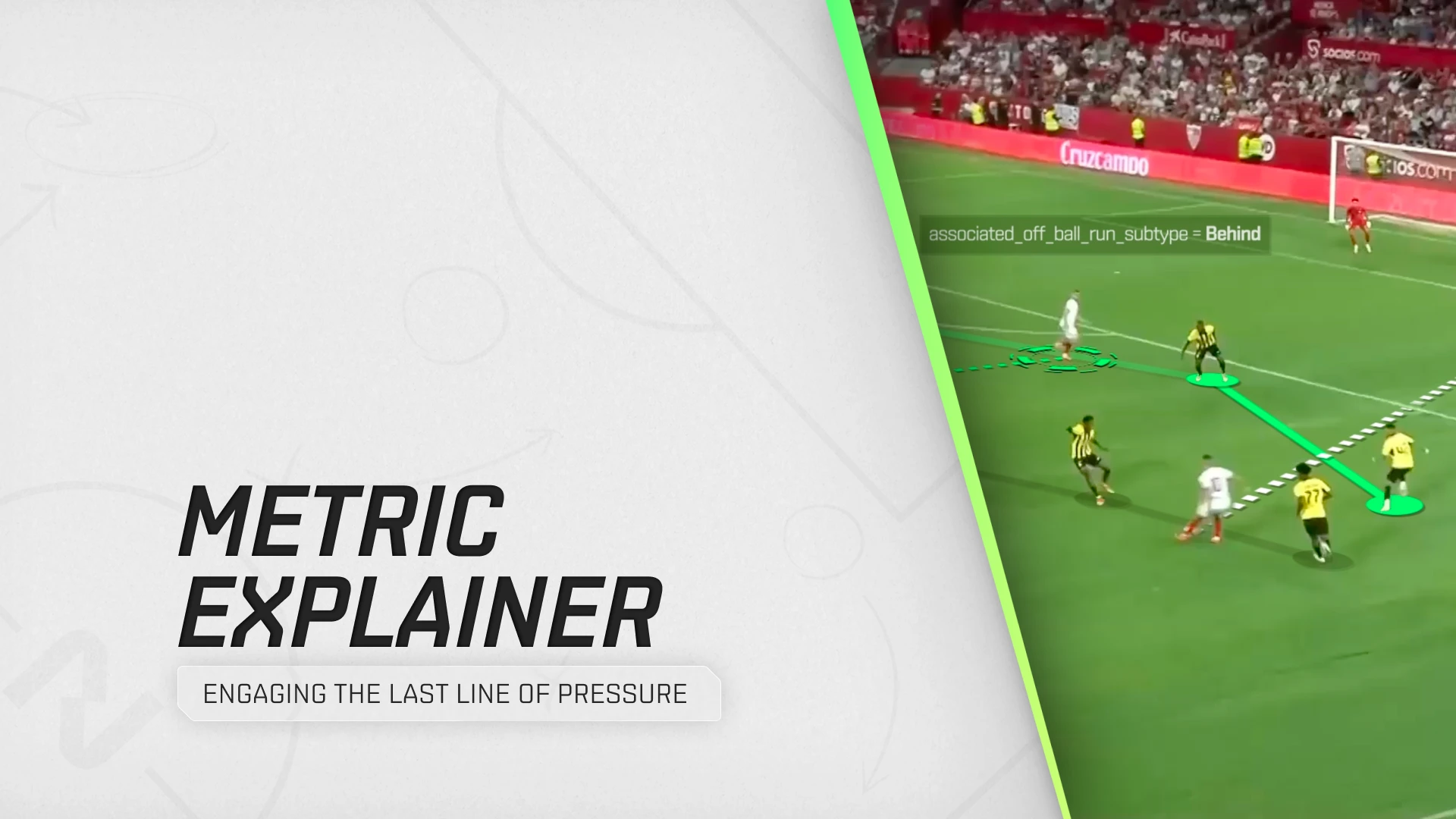


Metric Explainer: Passing Options – Engaging the First Line of Pressure
We can now identify a player's preferred spaces to receive, and their ability to beat the opposition's first line of pressure through their positioning.
Off-ball positioning reveals how a player relates to the game around them: where they choose to receive, and whether they make themselves available inside or outside of the opposition's defensive lines.
In Scouting and Recruitment, it provides the ability to profile players by their preferred areas of action, showing whether they may be a functional fit to a given game model. In Match Analysis, it surfaces the individual and collective patterns behind a team's play.
Until now, off-ball positioning has been extremely difficult to measure. Common event data captures what happens on the ball — the pass that was played — but completely overlooks the players showing up away from it who may never receive at all, and how their movement manipulates space, time and relationships. The choices that shape the game have for too long gone unrecorded.
That is where Passing Options come in.
Rather than only counting completed actions, they capture opportunity: the moments a player makes themselves a viable target for the ball-carrier. In doing so, they reveal both a player's preferred spaces to receive — their function — and how dangerous those positions are — their quality of positioning and movement.
Behind every Passing Option sits a Receiver model. At any given moment in a match, it produces a passing option score: the likelihood that a player is about to be served the ball, read from the full situation on the pitch.
A player only counts as a genuine Passing Option once that score clears a set threshold: high enough to filter out everyone who is nominally available and keep only those who represent a real, viable target for the ball-carrier.
Each line-breaking option is described by the opposition line it influences (first, second-last or last) and the block shape: through or around.
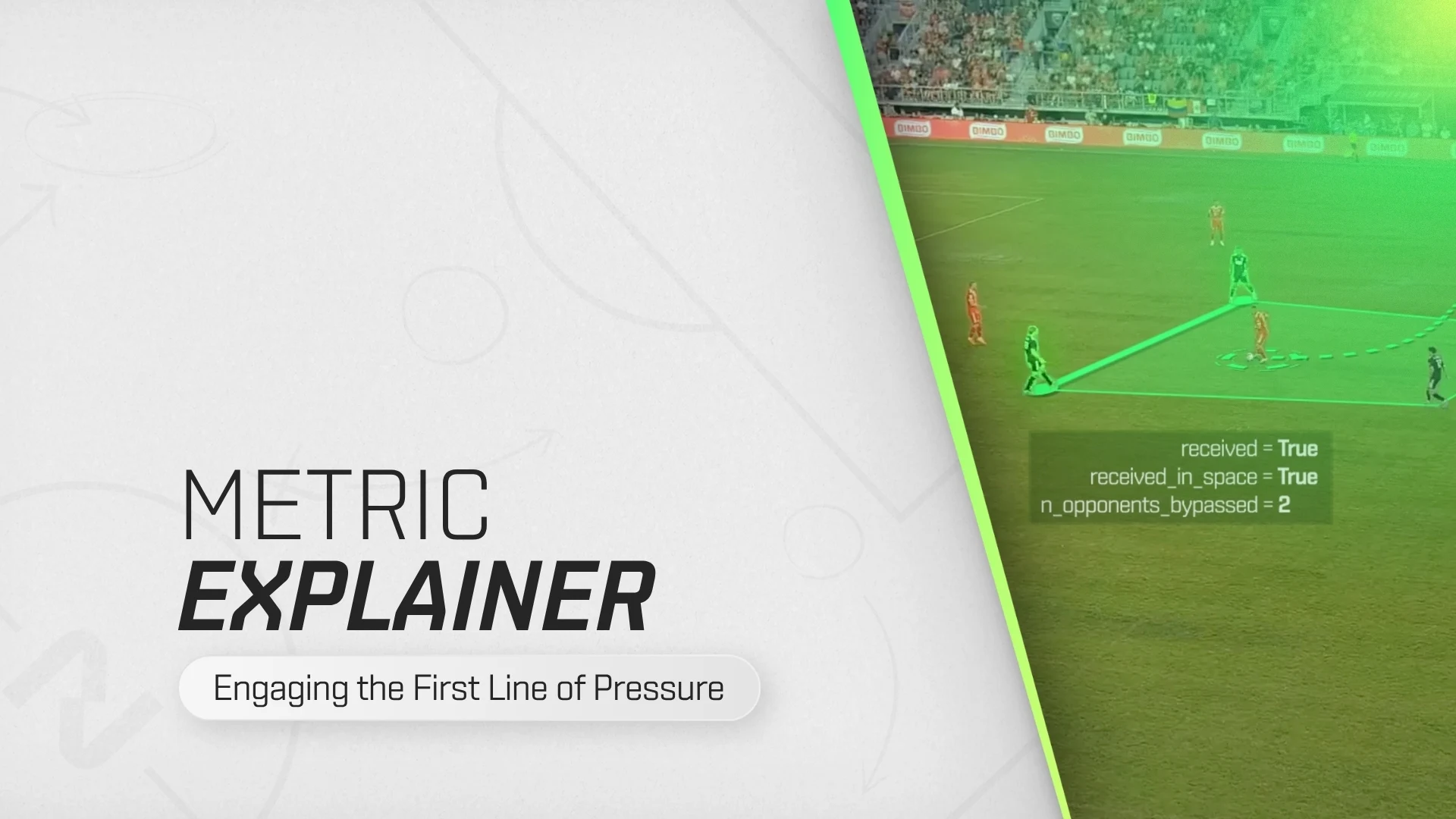
We start with the first line of pressure — usually the opposition's forwards — and the ways a player can beat it.
Applied Use Case
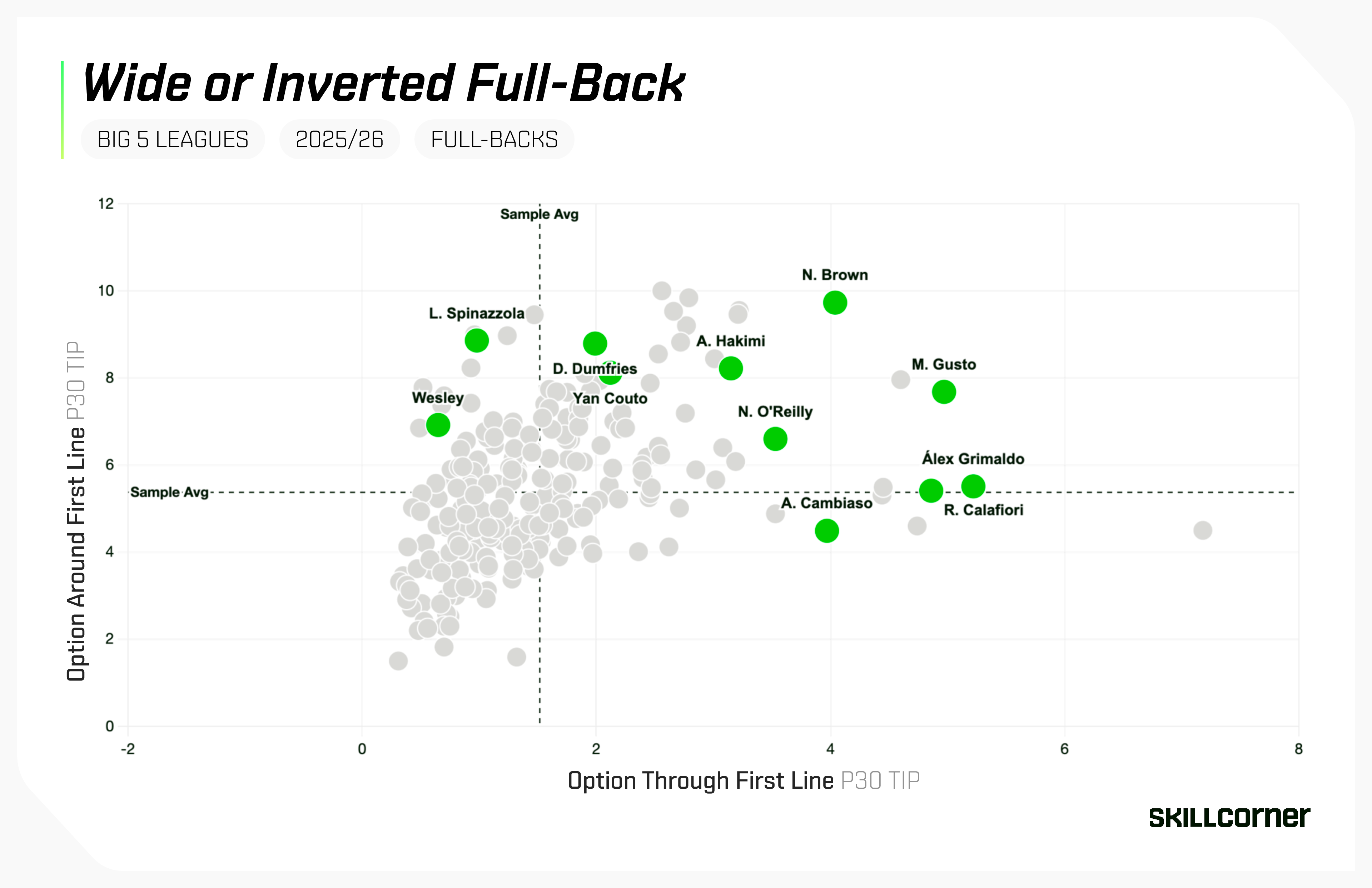
Wide or Inverted Full-Back
Positioning reveals a full-back's role in possession. Plotting Option Through First Line against Option Around First Line separates those who show up inside to receive between the lines from those who hold their width and offer solutions around the press.
Metric Definition
Option Through First Line is the number of times a player was in a position to receive a pass inside the opponent's first line of pressure. More specifically, it represents the number of times a player was positioned between the widest players of the opposition's most advanced defensive line.
Option Around First Line is the number of times a player was in a position to receive a pass outside the opponent's first line of pressure. This represents the number of times a player was positioned beyond the widest players of the opposition's most advanced defensive line.
In SkillCorner's Game Intelligence framework, a Passing Option is an off-ball Dynamic Event: it captures the moment a player makes themselves available to receive a pass from the current ball-carrier, recorded whether or not the pass is actually attempted or completed. It logs a teammate positioning themselves or moving to open up a passing lane, creating a viable target. It is never a simple yes/no, as each option carries a set of contextual flags (Phases of Play, xT, xP, and many more).
Far from a traditional event, a Passing Option captures opportunity rather than outcome. By mapping every option available to the ball-carrier against the choice they actually made, it opens the door to deeper analysis of positioning and decision-making.
Passing Options are one of the key contextual metric groups that make up our Game Intelligence suite, combining on and off-ball insights for more precise performance and stylistic profiling. Get in touch to learn more.